Showing posts with label transitional kindergarten. Show all posts

Sunday, March 27, 2016

Hello Fairy Tales!

Hello!

So we've been super busy in the classroom recently, getting ready for Open House and then Spring Break (which I am currently on) but that still isn't an excuse for being so distant from here! So I've written a few blog posts and will schedule them to post fairly regular so you wont be without some fun news from our classroom!

Anyway, I'm here to talk about my favorite unit that we have covered so far this year (it's actually my favorite that we cover all year long) : Fairy Tales!! My Littles and I have spent that past month learning all about fairy tales and folk tales. We did so many fun activities that came out so awesome!

We started our unit off with talking about common "rules" for both Fairy Tales and Folk Tales. We named specific stories that followed each rule, and then made a big poster showing the rules we needed to classify new stories we were going to read!


The first story we read was Jack and the Giant Beanstalk. This was the perfect way to kick off our unit because the kiddos got to do some science (which seems to be their favorite subject) and they had a "take home" product that parents were really impressed with. We got to grow our very own MAGIC BEANS! We started with a big chart and discussed the three main things our magic beans would need to grow: sun, soil, and water.


The kiddos replicated the chart on a paper plate that I divided into three, and I put that up on our science board. The next day we planted our very own magic beans.


I learned early on that I cannot grow anything to save my life if I have to worry about watering it every day, so now any time I have to grow something for the class I follow this method. I place dry soil in a Styrofoam cup punch a hole in the middle of the soil about an inch deep, place seed in the hole and then lightly cover. (The kiddos did all the this in class.) Then I put some water in the cup until the soil is MOIST, not muddy! Now, here is my trick for making things grow. I take a square of plastic wrap and lay it flat over the top of the cup and then rubber band it to the cup. This creates a greenhouse that will self-water and hold in the heat! I place all the cups in a plastic container and then place them in the sun every day. That's it folks! I don't touch them at all, except to pull them into the classroom for the night. This is how they turned out!


We read Cinderella next and talked a lot about what it might be like if we had a Fairy Godmother. We talked about the wishes we would make, and many students were actually quite concerned about whether or not they could use wishes for other people! I had a bunch of my littles share with the class what they would wish for with a Fairy Godmother, and many asked for toys, some asked for things for their family, and others asked for things for their friends. They were all really excited to share and it made my little teacher heart happy! We did a guided writing assignment (my early birds did one sentence, and my late birds do another) and then completed the craftivity that went with it. My kiddos got to pick the color hand they wanted and the colors for their "magic burst" behind their wands, so those aspects are 100% individual to each student.


 My early birds came up with the sentence "I would do magic." They helped me spell everything, and I wrote each letter down just as they told me to spell.

Right now they have select sight words they need to spell correctly, and then they need to focus on the beginning and ending sounds of words. I think they did pretty stinkin' awesome!


My late birds chose to write the sentence "I would give presents." Many students wanted to give presents to specific people, but trying to write so many different people got really complicated so we just settled on giving presents in general.

Again, they are focusing on the beginning and ending sounds with the select sight words being spelled correctly.


After all the writing and gluing was done I went back with glue and glitter and I glittered EVERYTHING! It came out super cute! (Although, I'm still finding glitter all over the room, and the night custodian that cleans the kindergarten wing still hasn't forgiven me. Haha!)

The next activity we worked on was a compare and contrast activity between The Three Little Pigs, and The Three Little Fish.


This was the version of The Three Little Pigs that I read to my littles. It was the perfect way to introduce folk tales since it so clearly followed all the special rules we were looking for.


This story is so adorable! (**I am NOT sponsored to promote this book at all! I just love it and I use it every year when I do this unit.) It mirrors The Three Little Pigs and is a great way to get young thinkers to compare and contrast two stories! We did a quick compare of the stories and found ways the stories were the same, and we did a contrast to show how the stories were different. The typical differences were the settings and characters since one takes place on land and one takes place in the sea. My littles LOVED talking to each other about the differences between the two stories.

After we compared and contrasted I had my kiddos complete another craftivity that related to each book. 


My early birds completed the Three Little Fish craftivity and my late birds completed the Three Little Pigs craftivity. I gave each student actual pieces to identify the materials used to build the houses in each book. I did substitute a few things that I couldn't get a hold of in time (i.e. seaweed and hay/straw) so I used green tissue paper cut into wavy strips for seaweed, and I used yellow present stuffing to simulate straw. If you have those materials available you can use them, although I don't know how seaweed would do with the glue or if it might start to smell. If you try it, let me know how it turns out!

The students again focused on phonetic spelling. Straw, Sticks, and Bricks.
Phonetic spelling of seaweed, sand, and wood.

Our last big activity we worked on was actually inspired by an AVID lesson I did for some district higher-ups. I have a big theme board that I decorate with every new theme we do. For our AVID lesson I had the kiddos work together to create a castle out of large shapes that had been cut out. They did a great job. The next day I gave them individual sheets of paper and they had to do it on their own. Each castle was unique and beautiful and the kids had so much fun. When they were done creating they needed to come to me and identify how many of each shape they used to create their castle. 

**Note: We focus on the four basic shapes: square, rectangle, circle, and triangle, so those are the four shapes on my write up. If you do more, you can always add more or have them verbally identify them!

Here is the large "theme board" that proudly displays their AVID creations as well as their individual creations.
As you can see, they all did a wonderful job! Here are a few up close looks at some of the student works:

 They are a little blurry but the write up says "To make my fairy tale castle I used ___ squares, ___ rectangles, ___ circles, and ___ triangles." The kiddos were expected to count each shape and then write the number in the correct blank. My kiddos were expected to create their own circles, and for beginners (some of these littles have never even looked at scissors before much less cut with them) I think they did a great job of trying to cut out some circles from some rectangles and square pieces!

I did a few miscellaneous worksheets to tie in Rapunzel, Goldilocks and the Three Bears, and the Princess and the Pea, but weren't nearly as exciting or as engaging as these fun activities.

Well, I hope, if you are ever in the mood for some fairy tale activities that you give some of these a try! My littles loved them and I know yours will too! And I hope, above everything else, that you always remember: Every moment is a learning moment!

Sincerely from TK,


Monday, August 17, 2015

Help with Holding a Pencil!

Hello!!

So I have officially started school, and boy, this years class has some new challenges that I wasn't faced with last year! I am excited to tackle each one head on. First, I have a good portion of my class that have never held a pencil before, at least not "correctly." So that is what this post will be about!

I have many methods that I use to work with my kiddos on correct pencil grip. The first one is a fuzzy ball! I give the kids a pom-pom of their favorite color and I tell them to hold the ball with their "bottom" three fingers. This method was really successful last year, but unfortunately was not so successful this year. And, as an added downfall...my kiddos this year termed the pom-pom hand method as "making a gun." Big no no...so I had to find something quick to help my kiddos that didn't look like I was teaching them to play guns with their writing hands!

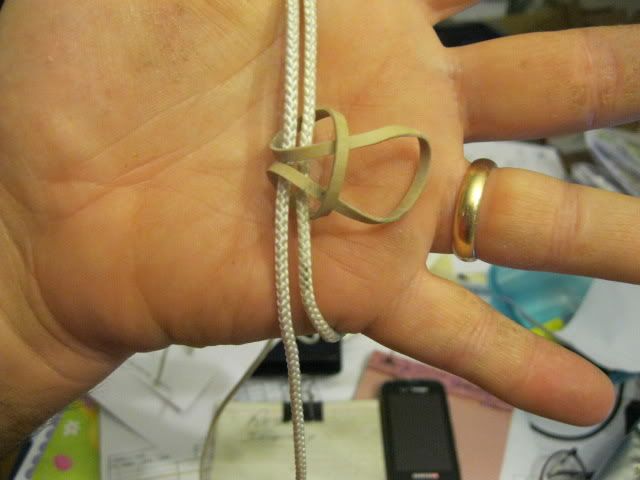
In came the rubber bands! Now, you may  be saying, "Nichole...how do rubber bands help a kid hold a pencil?!" Well, I'm here to show you! First I wrapped the rubber band around the pencil so that it was secure...like so...
Like this...except around a pencil
 Then I had the kiddos slip the big loop around their wrist, with the pencil resting on their arm and VIOLA!! It worked! I had two wonderful models show me exactly how it had helped them in holding their pencils!


I still have a few that need some other method (this and the ball method did not work) so I'm still on the hunt for new ways to work on pencil grip! If you have any suggestions, let me know! I'm always willing to give things a try!

I hope this helped anyone who might be struggling with pencil grip!

Always remember: every moment can be a learning moment!!

Sincerely from TK,
Nichole

Sunday, July 19, 2015

What *is* TK??

Hello!

So, over the past weekend I was lucky enough to have the opportunity to explain to my aunt (who is from Texas) the wonders of what I do. I gushed and I enthused. I shared about the wonderful things I get to do with my kiddos each year, and planning for subsequent years. I went on for about thirty minutes before she stopped me with a question that had me frozen in shock: 

"What is tk??"

What is tk? WHAT IS TK? I was so shocked it took me a hot minute to really form a decent answer for her. I had, in my blissful ignorance, assumed that EVERYONE knew about TK. What it was, how amazing it was to teach it, the benefits...what "TK" even stood for. I was so surprised to find that this is definitely not the case!

Now, I want to put a disclaimer out there: I AM NOT AN EXPERT! These answers are based on information I have received from my district, some personal researche I have done on my own time, and discussing with other TK teachers. These answers are not written in stone, and more often than not will change in the future. I just want to shed a little light on the TK world. 

1. What is TK?
TK (also known as Transitional Kindergarten) is a new program being implemented in the state of California. As far as it has been explained to me, California is trying to split kindergarten into two years. The first year is TK. It is different from preschool and PreK, as well as regular kindergarten (those differences will be explained in a later question.) TK is completely optional. It is not mandatory in the state of California to have your child in school until they reach the age of 6, so TK and kindergarten are not mandatory at all. (I think they should be but, that's just me.)

2. What does TK consist of?
A day in TK is very different from a day in kindergarten. My day consists of teaching reading, writing, math, science, social sciences, P.E. and art. On top of all of this I also focus a good chunk of my time for developmental play. My principal actually wants me to focus a good 45 minutes each day on just developmental play because that is the distinguishing factor between TK and kindergarten. 

Expectations will vary from site to site, as well as district to district. In my TK students are expected to learn their ABCs, 123s, sounds, and basic sight words (my rainbow program that I created for my class consists of 30 sight words.)  I focus on teaching the mechanics of scissor working, holding a pencil, proper glue etiquette, and peer-to-peer interactions. I work towards writing a complete sentence by the end of the year so when they move on to kindergarten, they can focus on putting simple sentences together to form easy paragraphs. My job is to prep the students I get and help them get ready for a year in a regular kindergarten class. Hopefully, if I've done my job properly, kindergarten teachers can focus their attention on students who haven't been exposed to academic concepts. Basically, kindergarten teachers get to spread themselves a little less thin because a portion of their students (the ones who came from me) will have already mastered certain things (ex: their ABCs, 123s, writing their name, beginning reading and writing skills etc.)

3. How is TK different from preschool or PreK?
A lot of this is actually licensing. To be a preschool or PreK teacher in my district you have to have special early childhood development credits. I must have a valid California teaching credential, BUT (please notice the bolding and underline) that is because I have been "granfathered" into the program. (This will be discussed in the next question.) 

TK is also different from preschool and PreK because EVERYTHING I do is 100% aligned with the kindergarten California common core standards. I cannot speak for every preschool or preK class, but that is the stipulation laid down for me by MY DISTRICT. I must follow the CCSS in everything I do, and everything I do must be justified by a standard. The only aspect of my classroom day that is not aligned to the standards is my "developmental play time" and again, this is something I am required to focus on. (My background is 3 years of kindergarten instruction so cutting a big chunk out of my day for this is tough for me because I can think of so many more ways to use it.)

4. Do TK teachers need to be credentialed? Do they need the ECD (early childhood development) credits like a preschool teacher?
Yes. Every TK teacher must hold a valid teaching credential. On the cde.ca.gov website it states: "Yes, in California, TK teachers need to have a teaching credential, just like Kindergarten teachers." {source found here} The ECD credits is where it gets a bit tricky. I do NOT have any required ECD units. (My emphasis was in Early Childhood Development and Early Psychological Development but I do not have the necessary units to be a preschool teacher.) The reason I do not need to go back to get my ECD units is because I was "grandfathered" into the program. Basically, I was hired before the state of California set down specific guidelines on what is necessary to be a TK teacher. Again, on the cde.ca.gov website it states: 

That "a school district or charter school shall ensure that credentialed teachers who are first assigned to a TK classroom after July 1, 2015, have, by August 1, 2020, one of the following:
  1. At least 24 units in early childhood education, or childhood development, or both.
  2. As determined by the LEA employing the teacher, professional experience in a classroom setting with preschool age children that is comparable to the 24 units of education described in bullet 1.
  3. A child development teacher permit issued by the California Commission on Teacher Credentialing (CTC). " {source}

Now, Nichole, you just said YOU don't have any special ECD units. How do you qualify?? And you are 100% justified in asking that question. As I mentioned before I was "grandfathered" in. If you continue reading on that page it continues to say:
 
"Any current credentialed teacher who is or was assigned to teach TK, or a combination class of kindergarten and TK, on or before July 1, 2015, is “grandfathered in” to teach TK without having to meet additional requirements. Any credentialed teacher assigned to teach TK, or a combination class of kindergarten and TK, after July 1, 2015, will have until August 1, 2020, to meet the above-mentioned education requirements." {source}

I was hired July 27, 2014. I eventually will have to go back (simply because I want to at this point) and get the units, but it isn't required of me just yet. 

5. How does a student qualify for TK vs. Kindergarten?
Right now, this is very simple to explain. Way back when I was in school, the cutoff for kindergarten was December 2. California has slowly been moving back the cutoff date. As of right now, it is Sept 1. I get the kids that have birthdays that fall from September 2 - December 2, so they are 4 when they start in my class. They are too young for kindergarten, and too old for preschool. SEND THEM TO ME! They are developmentally at the age where the extra time in TK will benefit them and send them on to a successful academic career. They will be starting with other kids their age, but they will be starting kindergarten AHEAD. I love that idea. 

6. What if a kid is ready for 1st grade at the end of TK? Do they still have to go through the year of kindergarten as well?
This answer is tricky. I don't like jumping kids up. I never have. (I was a candidate as a child and I thank my lucky stars my parents decided against it for me.) By the book, kids must enroll in kindergarten after they finish TK. BUT (and this is a BIG but) there are exceptions to that rule. Last year I had a little boy that came to me advanced. He knew 99% of everything I was going to teach him through out the year and the only reason he wasn't in Kindergarten is strictly because he missed the cut off by a week or two. I taught him above his grade and challenged him with standard kindergarten materials because I didn't want him to get bored. I was approached by my principal and instructed to give a handful of students the ending kindergarten assessment (parents were requesting that they jump.) The required pass rate to jump was 100%...he passed it with 100% accuracy. 

Long story short, if they are 100% ready they can jump (based on your district's requirements) but I rarely recommend it. I think each grade offers their own unique focus and developmental challenges that skipping isn't the best option. (I'll get off my soap box now.)

7. What does a typical day in TK look like? (Daily routine)
I have an early bird/late bird schedule. So my day goes as follows:

7:45-8:30 Universal Access/Developmental playtime (this is when I do assessments, and guided reading/writing)
8:30-8:40 Morning warm-up (clean up and dances)
8:40-8:45 Late birds show up
8:45-9:00 breakfast for the class
9:00-9:30 carpet time/calendar/morning meeting (this takes place on the carpet and is where I do the majority of my teaching)
9:30-9:45 morning math (introduction of the concept)
9:45-10:00 morning recess
10:00-10:15 Math seat work
10:15-10:45 Phonics/ELA time
10:45-11:00 clean up (early birds pack up to go home from cafeteria) line up
11:00-11:40 lunch and lunch recess
11:40-12:25 Universal access/developmental playtime (for late birds)
12:25-12:35 afternoon cool down (clean up and dances)
12:35-12:45 final message (positive shares and thoughts)
12:45 go home

My ELA time and Math time gets the art, science, social sciences, and P.E. all rolled into it. Certain days will have specific lessons, but for the most part that is my typical routine. 

Well I hope I have answered everyone's questions! If I didn't please feel free to leave one in the comments and I'll either make a follow up blog post or I'll answer directly in the comments!

Thank you so much for everyone's feedback and giving me a general idea of what you want to know. I hope it was helpful!

Always remember, every moment can be a learning moment!

Sincerely from TK,
Nichole
Related Posts Plugin for WordPress, Blogger...